
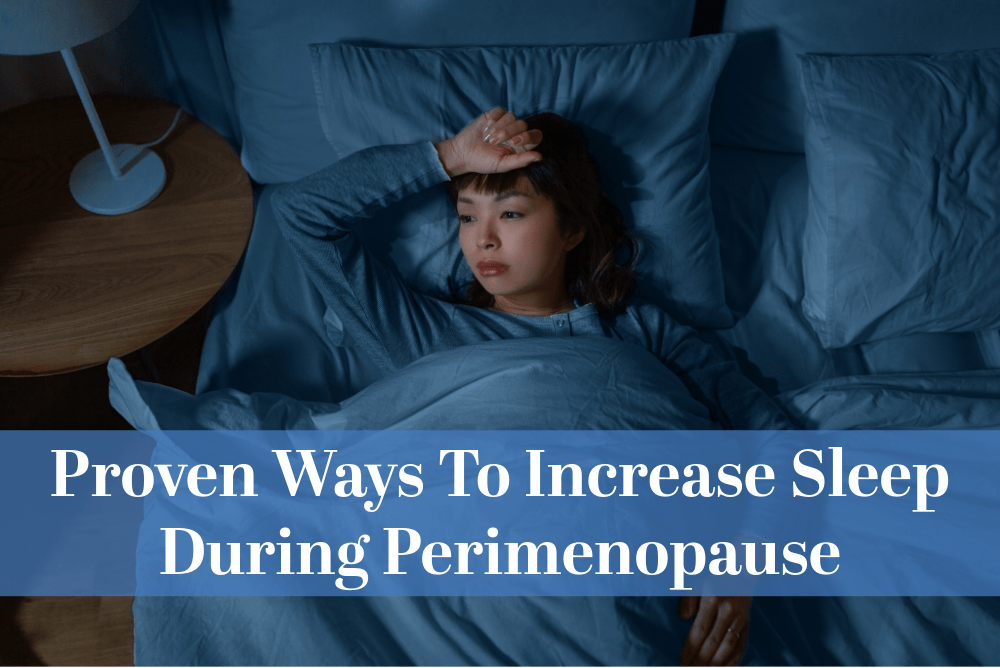
Sleep is a surprisingly dynamic and complex process that helps restore the body and mind. When you don’t get good sleep for a long time, it can feel like your life is going off the rails.
Thanks to fluctuating hormones, perimenopause can cause insomnia. Pair poor sleep quantity with night sweats, and you’re left feeling exhausted and miserable.
For some women, the mental health challenges during perimenopause can be debilitating. In this article, we will explore the challenge of insomnia and offer solutions to better sleep during perimenopause.
Why Sleep (and You) Suffers During Perimenopause
During your reproductive years, progesterone and estrogen cycle monthly and creates a predictable pattern of physical processes. You may have noticed that you felt better earlier in the month. As your period neared, you may have felt more irritable and moody.

Perimenopause, throws the playbook out the window. Predictability no longer applies because the hormones do not follow ANY pattern. Here’s where sleep comes in: Progesterone begins to drop during perimenopause. When it does, you lose the calming effect that helps to ease anxiety and that relaxes you into sleep.
In addition, estrogen fluctuates wildly. This contributes to hot flashes, night sweats, and sometimes even COLD flashes; making you feel like you have a broken thermostat. Needless to say, your sleep can suffer from this.
Common sleep disturbances during perimenopause include:
- Difficulty falling or staying asleep
- Frequent night awakenings
- Poor sleep quality
Being aware of these disturbances helps in managing them effectively. By identifying these sleep issues, women can take targeted actions. Personalized solutions aim to improve sleep, reducing daily fatigue.
The Impact of Poor Sleep on High-Stress Professionals
Sleep is fundamental for managing stress, especially for corporate executives. Lack of sleep impairs focus, decision-making, and cognitive abilities. This can lead to decreased productivity and increased errors.
Stress from work amplifies sleep problems, creating a vicious cycle. Over time, sleep deprivation can also impact physical health, leading to issues like hypertension. It’s crucial for high-stress professionals to address sleep problems to maintain overall well-being.
Common consequences of poor sleep include:
- Reduced alertness and concentration
- Impaired decision-making
- Increased risk of health issues
Identifying the link between sleep and stress can encourage proactive steps towards improvement. Recognizing these effects is crucial for developing a balanced, healthy lifestyle.
Tired but Wired
After accumulating nights of lost sleep, anxiety heightens and mood suffers, contributing to poor attitudes about sleep. You start to believe that you WON’T get good sleep.

You Were Made to Sleep
In Dr. Colin Espie’s book, “Overcoming Insomnia,” he reminds us that sleep is natural.
He says your body and mind are preset to sleep. When we begin to lose our faith in our ability to sleep, we develop chronic insomnia.
Cognitive Behavioral Therapy for Insomnia (CBT-I)
Dr. Espie is a sleep expert that has developed protocols to observe and manage insomnia. These strategies are rooted in cognitive behavioral therapy, and are specific to insomnia (CBTI). In therapy, your therapist can guide talks and ask questions. This can help you understand what keeps you from sleeping.
CBT-I Strategies for Perimenopause
Dr. Espie’s work centers around CBT-I, the gold standard in non-medicated insomnia interventions. This method helps improve sleep through therapy and avoids sleep medicine unless it is truly needed.
He uses multiple strategies to zero-in on improving sleep.
Sleep Journaling
In the beginning of your work toward better sleep, you may need the help of documenting your sleep each night. What time you go to bed each night, when you wake up, and how often your sleep is interrupted are key clues.
These clues show your sleep habits. Over time, you and your therapist may find patterns and unhelpful hindrances that impede sleep.
Sleep Pressure
You need sleep pressure. You’re probably thinking, “I don’t need any more pressure in my life,” but this is actually a very necessary pressure. Each day your brain needs the hormone adenosine to signal sleep.
If you avoid caffeine and other stimulants and your body becomes tired, it “builds sleep pressure” throughout the day. If you don’t suffer from insomnia, the. adenosine or sleep pressure wins you over and you sleep.
Creating a Sleep-Friendly Environment
A sleep-friendly environment can greatly enhance sleep quality during perimenopause. Simple changes in your bedroom setup can make a significant difference.
Begin by ensuring your room is cool, dark, and quiet. These conditions are optimal for restful sleep. Consider using blackout curtains or an eye mask to block light.
Evaluate your bedding and mattress for comfort. Investing in breathable, soft fabrics can improve sleep quality. White noise machines or earplugs can help drown out disruptive sounds.
Your sleep-friendly checklist might include:
- Cool room temperature
- Comfortable and supportive mattress
- Noise reduction techniques
Sleep Hygiene
During therapy, your therapist can help you understand how your sleep habits contribute to the quality of sleep you are getting. Everything from room temperature, blue light exposure, eating too much, etc. are all considered.
Remove electronic devices from the bedroom. The blue light from screens can hinder the production of melatonin. This hormone is crucial for sleep regulation.
Keeping your bedroom a tech-free zone can facilitate a more serene and restful atmosphere. Each adjustment, though small, contributes to a conducive sleeping environment.
Protect Your Sleep
Prioritizing sleep is paramount. Consider it as important as staying hydrated. Do whatever is necessary to make sure you have the time and environment to make sleep happen. This may require the help of your therapist to brainstorm ideas to facilitate this.
Nutrition and Supplements: Natural Sleep Aids for Perimenopause
Your diet can greatly influence sleep quality during perimenopause. Certain foods have properties that promote relaxation and improve sleep. Increasing your intake of magnesium-rich foods, such as leafy greens and nuts, may help. Magnesium supports muscle relaxation and nerve function, contributing to better sleep.

Calcium also plays a vital role in sleep regulation. Dairy products, sardines, and fortified plant-based milks are excellent sources. They can help maintain steady calcium levels, necessary for producing sleep-regulating hormones.
Consider the following foods to bolster sleep:
- Leafy greens (e.g., spinach, kale)
- Dairy products or fortified alternatives
Herbal supplements offer another natural way to aid sleep during perimenopause. Valerian root, chamomile, and melatonin can be particularly beneficial. These supplements have calming effects and can be included in your nighttime routine.
Some popular sleep-enhancing supplements include:
- Valerian root for relaxation
- Melatonin to regulate the sleep-wake cycle
Remember to consult with a healthcare professional before trying new supplements. Personalized guidance ensures they’re safe and effective for your specific needs.
Medical Interventions for Perimenopause
Many times your therapy can work in tandem with your doctor’s help. If your perimenopause symptoms are hard to manage, talk to your doctor.
If HRT is right for you, your doctor may prescribe it. These bioidentical hormones include progesterone, the “calming hormone”, and estradiol. Estradiol supports many functions in the female body.
These along with talk therapy and CBT-I can put you on track for more restful nights sleep. In addition to better sleep, there are many ways therapy can support you through perimenopause.
Sleep aids can be a last resort. If you want a more natural way to sleep better, try CBT-I. It has an excellent track record.
Conclusion: Embracing Self-Care and Patience
Sleep is a major player in our quality of life. Without quality sleep, mental health can be in jeopardy. Talk therapy, especially utilizing CBT-I, can help to alleviate insomnia, contributing to better days and nights.
Perimenopause is a journey requiring compassion and patience. Embrace self-care as a vital part of this transition.
By integrating small, consistent changes, you’ll find sleep improves over time. Trust that each effort you make contributes to a healthier, more balanced life.


Leave a Reply